
Insurance for Security Guard Companies and Private Patrol Operators
Security companies protect people, buildings, events, inventory and job sites, but the work carries serious liability exposure. A guard injury, patrol vehicle accident, alleged wrongful detention, assault and battery claim, lost key incident, missed patrol, theft at a client location or contract dispute can quickly become expensive. Casurance helps security guard companies review Travelers commercial insurance options for general liability, professional liability, workers' compensation, commercial auto, property, crime, cyber, umbrella and certificate support.
Quick answer
Security guard insurance is commercial insurance designed for companies that provide armed or unarmed guards, mobile patrol, event security, construction site security, warehouse security, alarm response or private patrol services. Common coverages include general liability, professional liability, workers' compensation, commercial auto, property, cyber, crime, umbrella, assault and battery, false arrest and lost key coverage.
Security guard insurance built around real field exposure
Security businesses do not all have the same risk. A company providing unarmed lobby guards has a different exposure than a mobile patrol company, armed guard firm, event security contractor, construction site security provider or alarm response company. Insurance should be reviewed based on the services performed, client locations, guard duties, use of vehicles, payroll, armed exposure, contracts, training, supervision, claims history and certificate requirements.
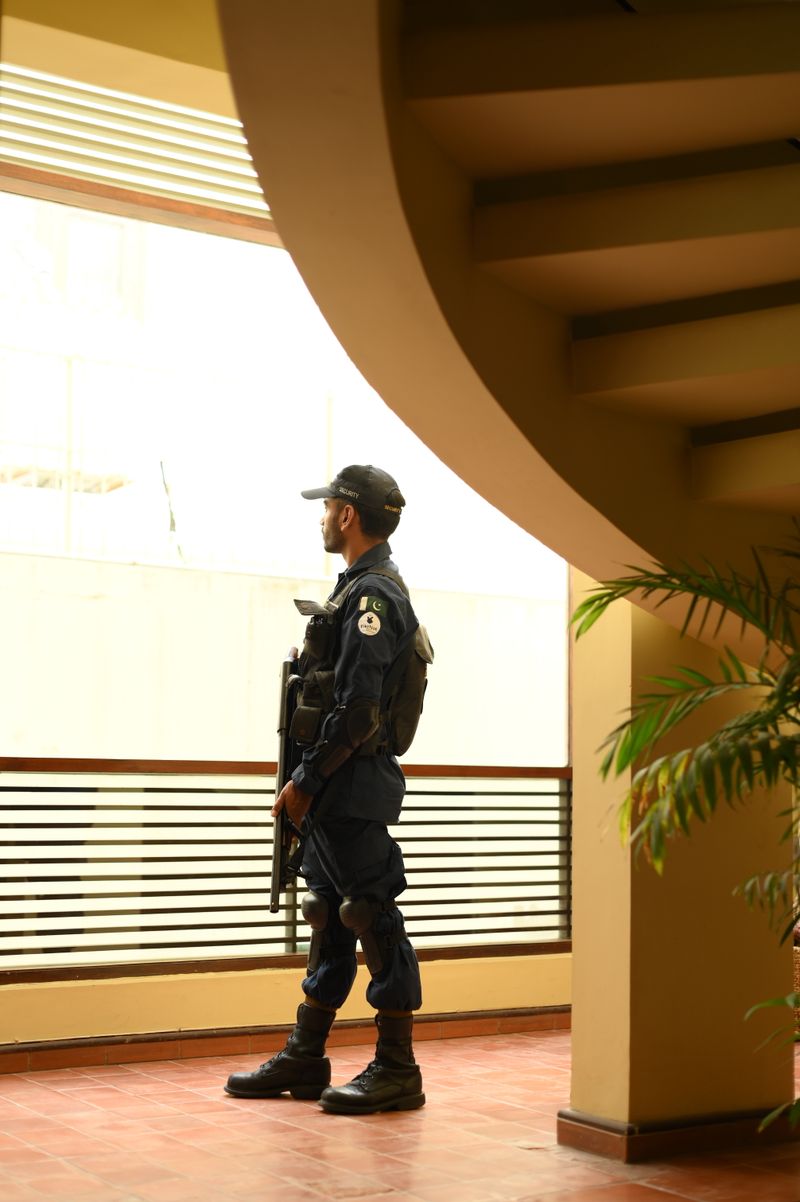
Client premises liability
Security guards work on property owned by others. Claims may involve slips and falls, property damage, failure to patrol, failure to respond, access control problems or allegations that the security company did not perform as contracted.
Professional liability / E&O
Security companies may face claims that their services were negligent, incomplete, delayed or failed to prevent a loss. Professional liability should be reviewed for service-related allegations.
Assault, battery and use-of-force allegations
Security work can involve confrontations, trespassers, crowd control, shoplifting, evictions or disruptive guests. Allegations of assault, battery, excessive force or improper detention should be reviewed carefully because standard policies may exclude or limit these exposures.
False arrest and wrongful detention
Guards may be accused of detaining, stopping, questioning or removing a person improperly. False arrest, malicious prosecution, invasion of privacy, personal injury and related coverages should be reviewed.
Patrol vehicles and mobile operations
Mobile patrols, alarm response, site checks and supervisor routes create commercial auto exposure. Company-owned, hired and non-owned vehicles should be reviewed.
Workers' compensation and payroll audits
Security guard payroll, armed versus unarmed classification, overtime, subcontractors, patrol exposure and state-specific rules can affect workers' compensation pricing and audits.
Security operations we help review
Coverage availability depends on services performed, armed or unarmed work, payroll, guards, contracts, training, loss history, vehicle use, state licensing, client industry, locations guarded and underwriting requirements.
Core security guard insurance coverage options
General Liability
May help respond to third-party bodily injury, property damage, personal injury and advertising injury claims. Security companies should review whether the policy addresses the realities of guard operations, client premises, access control, crowd control and personal injury allegations.
Professional Liability / Errors & Omissions
May help respond to claims alleging negligent security services, missed patrols, failure to respond, improper procedures, incomplete work, inadequate supervision or failure to perform contractual duties.
Assault and Battery
Security guard work can involve physical confrontations. Assault and battery coverage should be specifically reviewed because some policies exclude or restrict this exposure.
False Arrest / Wrongful Detention
May help address allegations involving improper detention, wrongful removal, malicious prosecution, invasion of privacy, libel or slander, depending on policy terms. This is important for retail, event, property and patrol security.
Workers' Compensation
May help cover medical expenses and lost wages for covered employee injuries. Security guards may face injuries from slips, falls, confrontations, vehicle accidents, heat exposure, long shifts, lifting, patrol activity or job-site hazards.
Commercial Auto
May help cover vehicles used for patrols, alarm response, supervisor visits, client site checks or guard transportation. Review company-owned vehicles, hired vehicles, non-owned autos and employees using personal vehicles for business.
Commercial Property
May help protect office contents, uniforms, radios, computers, dispatch equipment, surveillance equipment, training equipment, tenant improvements and business personal property.
Umbrella / Excess Liability
May provide additional liability limits above underlying policies. Many security contracts require higher limits, especially for government, retail, event, healthcare, school, warehouse or commercial property clients.
Specialized coverage security companies should review
Lost Key Coverage
If a guard loses keys, access cards, fobs or credentials, the client may require lock replacement, rekeying or access control reset. Lost key exposure should be reviewed.
Crime / Employee Dishonesty
May help protect against theft of money, securities or property by employees. Security firms should review crime coverage because guards may have access to client property, offices, keys, gates, vehicles or inventory.
Cyber Liability
Security companies may store client records, camera footage, site instructions, alarm response information, employee data or access credentials. Cyber liability should be reviewed for data breach, ransomware, phishing and system interruption risks.
Employment Practices Liability
Security companies with multiple guards, supervisors and shift schedules should review EPLI for claims involving wrongful termination, discrimination, harassment, retaliation, wage-related allegations or employment disputes.
Hired and Non-Owned Auto
If guards or supervisors use personal or rented vehicles for patrol, site visits or errands, hired and non-owned auto should be reviewed.
Equipment / Inland Marine
Radios, body cameras, laptops, tablets, surveillance equipment, portable cameras, uniforms, flashlights and other mobile equipment may need inland marine or equipment coverage.
Active Shooter / Workplace Violence Expense
Some security clients ask about active shooter, workplace violence or crisis response protection. Availability and terms vary, so these exposures should be reviewed carefully with a licensed agent.
Contractual Liability
Security contracts can transfer liability to the guard company. Contractual liability, indemnity wording and additional insured requirements should be reviewed before signing.
Bonds
Some clients, municipalities or contracts may require surety bonds, fidelity bonds or license/permit bonds. Bond requirements should be reviewed separately from insurance coverage.
Abuse and Molestation / Sexual Misconduct
Security firms serving schools, youth programs, religious organizations, healthcare facilities, shelters, residential communities or vulnerable populations should review abuse and molestation or sexual misconduct liability where applicable.
Real-life scenarios security companies should plan for
Customer alleges wrongful detention
A retail security guard detains a person suspected of theft. The person later alleges false arrest, invasion of privacy and emotional distress. The company's liability and professional coverage should be reviewed for this type of allegation.
Review: False arrest / Professional liability
Guard injured during patrol
A guard slips on a wet stairwell while checking a parking structure. Workers' compensation may help with covered medical costs and lost wages.
Review: Workers' compensation
Patrol vehicle accident
A supervisor responding to an alarm call rear-ends another vehicle. Commercial auto coverage may help respond to covered auto liability and vehicle damage.
Review: Commercial auto
Lost master key
A guard loses a client's master key or access fob. The client demands rekeying and access system replacement. Lost key coverage should be reviewed.
Review: Lost key coverage
Use-of-force allegation
A guard removes a disruptive person from an event. The individual alleges excessive force and files a claim. Assault and battery and professional liability terms should be reviewed.
Review: Assault and battery / Professional liability
Failure to patrol allegation
A client alleges the guard failed to complete required rounds before a theft occurred. Professional liability or errors and omissions should be reviewed for service failure allegations.
Review: Professional liability / E&O
Property damage at client site
A guard accidentally damages a gate, door, access control panel or client equipment while on duty. General liability may help respond to covered property damage claims.
Review: General liability
Cyber incident
A security company's dispatch system or client access instructions are compromised. Cyber liability may help with breach response, data restoration, legal response and related costs.
Review: Cyber liability
Employee dishonesty
A client alleges that inventory went missing during a guarded shift. Crime, employee dishonesty and contract wording should be reviewed.
Review: Crime / Employee dishonesty
Contract requires higher limits
A warehouse, event venue or government client requires additional insured status, waiver of subrogation, primary and non-contributory wording and umbrella limits before work can begin.
Review: Umbrella / Certificate support
Armed vs. unarmed security insurance considerations
Armed and unarmed security operations are underwritten differently. Armed work may require additional underwriting, firearms training documentation, permits, written procedures, stronger supervision, higher limits and careful review of assault and battery, weapons-related allegations and use-of-force exposure.
| Exposure | Unarmed Security | Armed Security |
|---|---|---|
| Typical duties | Lobby, gate, warehouse, retail, construction site, patrol, access control | Higher-risk locations, valuables, executive protection, government, financial, high-risk retail or special contracts |
| Underwriting review | Payroll, sites, contracts, patrol duties, claims history | Everything for unarmed plus firearms permits, training, policies, procedures and client risk |
| Liability concerns | False arrest, negligent security, property damage, personal injury, slip/fall, failure to patrol | Higher severity use-of-force, weapons, bodily injury, wrongful death and contract risk |
| Coverage review | GL, professional liability, workers' comp, auto, umbrella | Same coverages plus stronger review of assault and battery, firearms-related allegations, limits and exclusions |
Coverage depends on underwriting, policy wording, state rules, licensing, permits, services performed and carrier appetite.
What underwriters review for security guard companies
Underwriters look beyond payroll and revenue when reviewing a security guard company. The factors below commonly shape whether a submission is approved, declined, or approved with conditions, and can influence pricing and available limits.
Common red flags in security guard submissions
These gaps can slow down or complicate a quote, and some can lead to claim disputes if not addressed before a policy is bound.
California and national security guard insurance considerations
Casurance is based in Los Angeles, California and works with security guard companies operating across California as well as businesses located in other states. Security guard licensing, use-of-force rules, workers' compensation requirements and armed guard permitting vary by state, so coverage should be reviewed against the specific states where guards are deployed, not just where the company is headquartered. Whether a security company operates primarily within California or provides guard and patrol services nationally, Casurance can help review Travelers commercial insurance options against the applicable state requirements and client contract terms.
Coverage comparison for security guard companies
| Coverage | Why it matters | Often requested by |
|---|---|---|
| General Liability | Addresses third-party bodily injury, property damage and personal injury claims arising from guard operations at client sites. | Nearly all client contracts and property managers |
| Professional Liability / E&O | Addresses claims that services were negligent, incomplete or failed to prevent a loss, such as missed patrols or failure to respond. | Government, retail and higher-liability contracts |
| Assault and Battery | Addresses allegations of physical confrontation or use of force, which are common in guard work but often excluded by default. | Event venues, retail and nightlife clients |
| False Arrest | Addresses claims of wrongful detention, improper questioning or removal of a person. | Retail loss prevention and event security contracts |
| Workers' Compensation | Helps cover medical costs and lost wages for guards injured on the job. | Required for employees in most states |
| Commercial Auto | Covers vehicles used for patrol, alarm response or guard transportation. | Mobile patrol and alarm response contracts |
| Umbrella / Excess | Provides additional liability limits above underlying policies for higher-risk or higher-value contracts. | Government, warehouse and large event contracts |
| Lost Key | Addresses lock replacement or rekeying costs if a guard loses client keys, fobs or access credentials. | Office buildings, apartments and gated communities |
| Crime / Employee Dishonesty | Addresses theft of client money, securities or property by a company employee. | Warehouse, retail and cash-handling clients |
| Cyber Liability | Addresses data breach and system interruption risk for companies storing client records or access credentials. | Corporate and government contracts |
| Commercial Property | Protects office contents, uniforms, radios, dispatch and surveillance equipment. | Not typically contract-required, but recommended |
| EPLI | Addresses employment-related claims such as wrongful termination, discrimination or harassment. | Not typically contract-required, but recommended for larger guard forces |
Coverage availability and requirements depend on underwriting, state rules, contract terms and carrier appetite.
Coverage considerations by type of security operation
| Operation | Common exposures | Coverage to review |
|---|---|---|
| Unarmed lobby guard | Slip-and-fall, access control mistakes, visitor disputes | General liability, workers' compensation |
| Armed guard | Use-of-force, weapons-related allegations, bodily injury severity | General liability, assault and battery, professional liability, umbrella |
| Mobile patrol | Vehicle accidents, alarm response incidents, failure-to-patrol claims | Commercial auto, professional liability, general liability |
| Construction site security | Theft, trespasser confrontations, jobsite hazards | General liability, assault and battery, property |
| Retail loss prevention | False arrest, wrongful detention, use-of-force claims | False arrest, assault and battery, professional liability |
| Warehouse security | Employee dishonesty, inventory theft, access control failures | Crime, general liability, professional liability |
| Event security | Crowd control incidents, alcohol-related altercations, large-crowd liability | General liability, assault and battery, umbrella |
Why work with Casurance
Casurance is an independent insurance agency and is not Travelers. Coverage, eligibility and pricing are determined by the underwriting carrier and are subject to change. This page is for general informational purposes and does not modify any insurance policy.
Related Resources
Security contract and certificate support
Security companies often need certificates quickly to start a contract. Casurance can help review insurance requirements from clients, property managers, event venues, warehouses, retail centers, construction sites, HOAs, government agencies, schools and commercial landlords.
Additional insured
Many contracts require the client, landlord or venue to be added as additional insured on general liability or auto policies.
Waiver of subrogation
Contracts may require waiver of subrogation on general liability, workers' compensation, auto or umbrella policies.
Primary and non-contributory wording
Some contracts require your policy to respond first before the client's insurance contributes.
Umbrella / excess limits
Security contracts may require $2M, $5M or higher limits depending on site type and contract size.
Professional liability wording
Security service contracts may require E&O or professional liability for failure to perform, negligent security or service-related claims.
Assault and battery wording
Some clients require confirmation that assault and battery is not excluded. This must be reviewed carefully.
Workers' comp and employer's liability
Clients may require proof of workers' compensation and employer's liability limits before guards can be placed on site.
Commercial auto
Mobile patrol, alarm response and guard transport contracts often require proof of commercial auto coverage.
Information needed for a security guard insurance quote
Documents that help speed up your security guard insurance quote
The fastest way to review a security guard company is to provide current insurance documents, payroll details, contracts, license information, vehicle schedules and loss runs. Casurance can review these items and help identify coverage options through Travelers and available markets.
- Current policy declarations
- Renewal quote
- 3–5 years loss runs
- Security license or state registration
- Armed guard permits if applicable
- Firearms training records if applicable
- Guard training program
- Written post orders
- Client contract
- Certificate requirements
- Payroll report
- Employee roster
- Vehicle schedule
- Driver schedule
- Subcontractor agreements
- Claims history
- Safety manual
- Website or marketing material
- Current COI
- Any cancellation/non-renewal notice
Tip: Upload your current policy, client contracts, certificate requirements and loss runs with your quote and Casurance can review coverage against your contract terms before binding.
Related Coverage Pages
Related Industries & Classes
Protect your security company before the next contract starts
Send Casurance your current policy, renewal quote, client contract, certificate requirements, payroll, vehicle schedule and loss runs. A Casurance specialist can help review Travelers commercial insurance options for armed and unarmed security guard companies, private patrol operators, mobile patrols, event security and commercial security firms.
Coverage is subject to underwriting approval, state availability, policy terms, exclusions, conditions, and limits. This page is for general information only and does not modify any insurance policy.
About Casurance Agency Insurance Services
Casurance Agency Insurance Services is a licensed independent commercial insurance agency based in Los Angeles, California. Casurance helps businesses review commercial insurance options for general liability, workers' compensation, commercial auto, commercial property, cyber liability, umbrella and specialty insurance programs.
714 W Olympic Blvd
Los Angeles, CA 90015
Frequently Asked Questions
Get Your Instant Quote
Fast. Free. No Obligation.